

The Accreditation tab in the Document Extraction page provides an automated assessment of the issuing institution and qualification, and also available in the side navigation. It summarizes whether the institution is recognized, its legal status, and how its qualifications are treated by relevant authorities.
How to Use
- Start with the Accreditation Overview & Summary Table for a quick check
- Review Key Indicators to confirm recognition and legal status
- Check Recognizing Authorities for acceptance context
- Use Detailed Findings and Sources for deeper validation
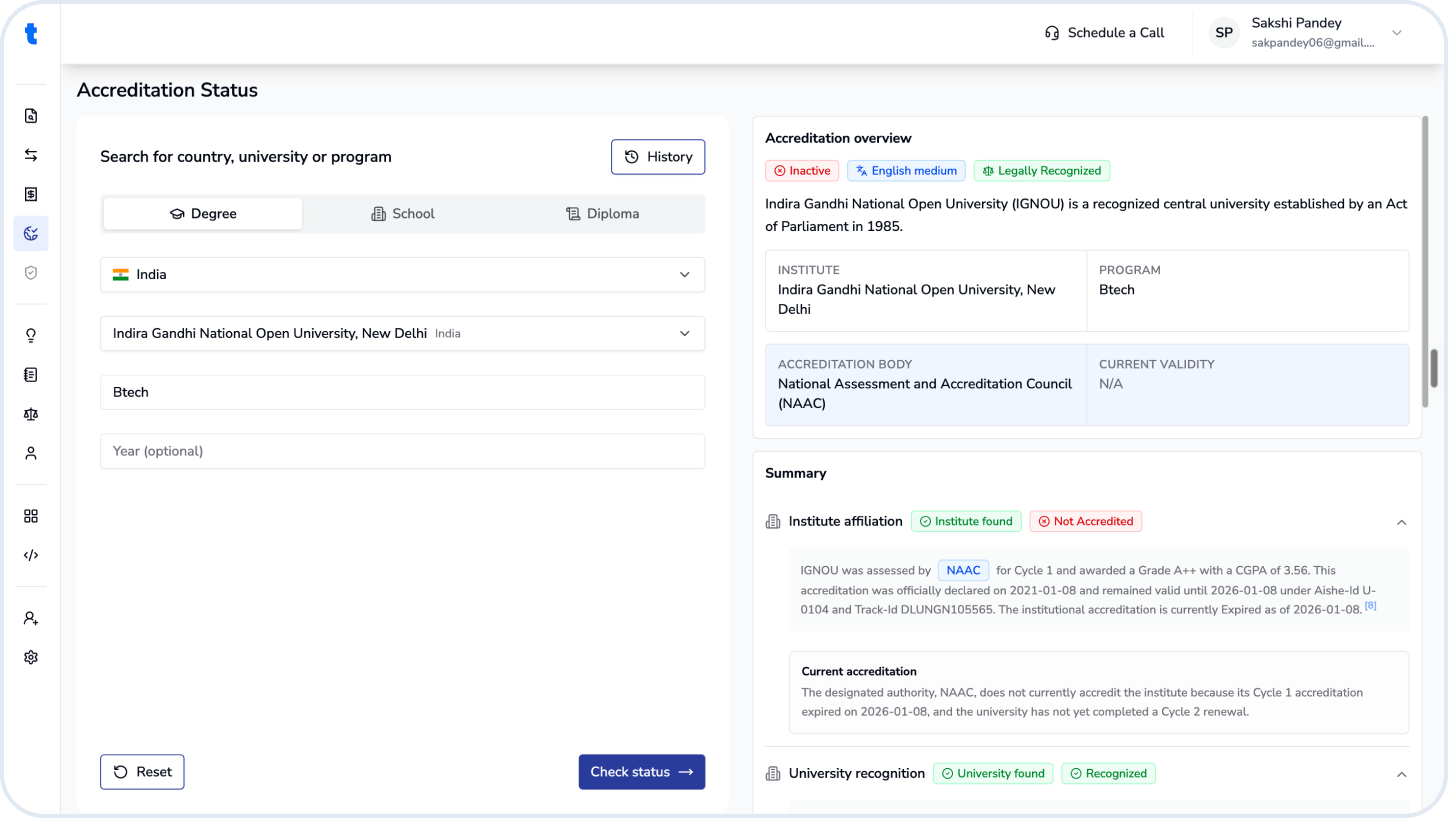
Summary Table
The summary provides a quick view of key accreditation indicators:- Accreditation Status → Whether the institution/board is recognized
- Medium of Instruction → Indicates if the qualification is delivered in English
- Board Accreditation → High-level description of the issuing authority
University/Board Details
This section describes the issuing authority in detail, including:- Background and history of the board or institution
- Legal foundation and governing framework
- Scope of operations and geographic coverage
- Recognition of its qualifications for higher education
Key Accreditation Indicators
- University/Board Found → Confirms whether the issuing authority was identified
- Accredited → Indicates if the institution/board is recognized
- Legal Status → Defines the nature of the organization (e.g., international organization, national authority)
- Verification Status → Whether accreditation details have been validated
Recognizing Authorities
Lists entities that recognize the institution or its qualifications, such as:- National governments
- Education ministries
- Universities and tertiary institutions
- International credential evaluation bodies
Education Levels Covered
Specifies the levels of education the institution or board administers, for example:- Primary or national assessments
- Secondary education certifications
- Senior secondary or university level qualifications
Detailed Findings
Provides a deeper explanation of the accreditation analysis, including context on recognition, comparability, and any notable considerations. Review this section when:- The accreditation status is unclear
- The institution is unfamiliar
- Additional validation is required
Sources
Lists all references used in the accreditation assessment. These may include:- Official institutional websites
- Government or regulatory sources
- International education databases
- Independent reference materials